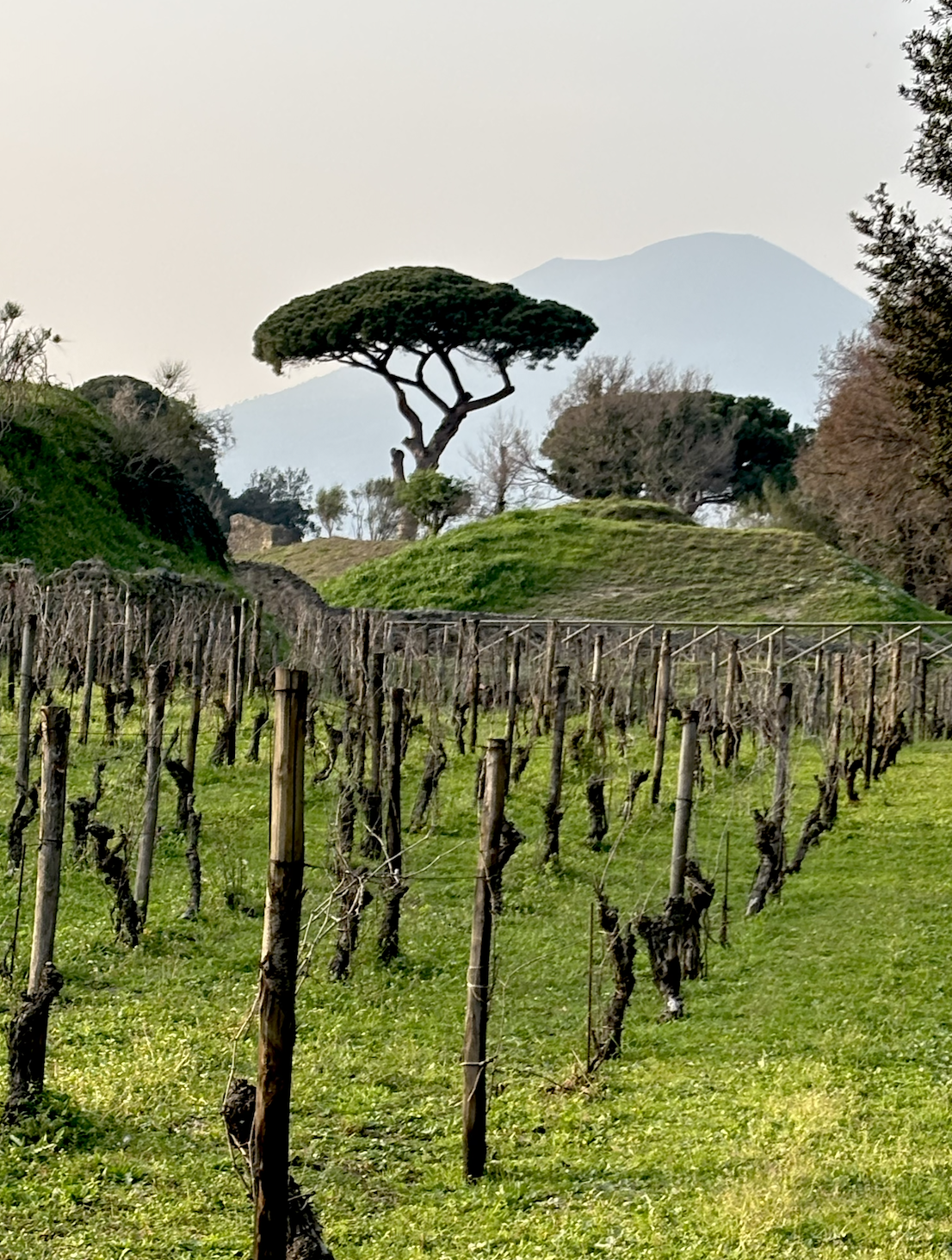
Chariot Tracks, Fast Food, and Frescoes - Pompeii Is Not What You Expect
There I was, standing in the middle of an ancient Roman street, both hands on top of my head, saying out loud to absolutely no one… "No way. No. way." And just like that, Pompeii became my favorite day of the entire trip.
This one's been on my list for a long time. Like, a long time. The first time I ever read about Pompeii was in a textbook - you know the kind, those thick, glossy, but super worn history books they hand you in grade school - and the idea just lodged itself somewhere deep in my psyche and never left. A city. Frozen. In time. An entire living, breathing civilization just... stopped. How does that not fascinate you?
So when I found out Pompeii was only about an hour and a half from Rome, it immediately became a non-negotiable part of the trip. An absolute must. Not a "maybe if we have time." A we are doing this.
And let me tell you, it blew every single expectation I had out of the water.
Getting There: The Journey Is Part of It
Real talk: getting to Pompeii from Rome is a commitment. This is a full day out. You're not popping over for a quick look and heading back for a leisurely dinner. Plan for it, own it, embrace it, because it is absolutely worth every minute.
Here's how it works: you start with the high-speed train from Rome, which is honestly a whole vibe in itself. Super spacious, genuinely fast, and perfectly on time (Italy's high-speed rail does not mess around). Then you transfer to a smaller local train, hop off, take a short walk, and just like that - you're standing at the entrance to one of the most remarkable places on earth.
The travel is easy. The experience? Life-changing.
What No One Actually Tells You About Pompeii
Here's the thing. When most people think about Pompeii, they think about the tragedy - the volcano, the ash, the casts of people frozen mid-moment. And yes, all of that is real and it is haunting. But what nobody tells you before you go - what genuinely caught me off guard… is how familiar it all feels.
Pompeii wasn't some rough, primitive settlement. It was a city. A proper, fully-functioning, thriving city. And walking through it feels less like visiting ruins and more like walking through a neighborhood that just... got paused.
Let me give you some specifics, because the details are what get you:
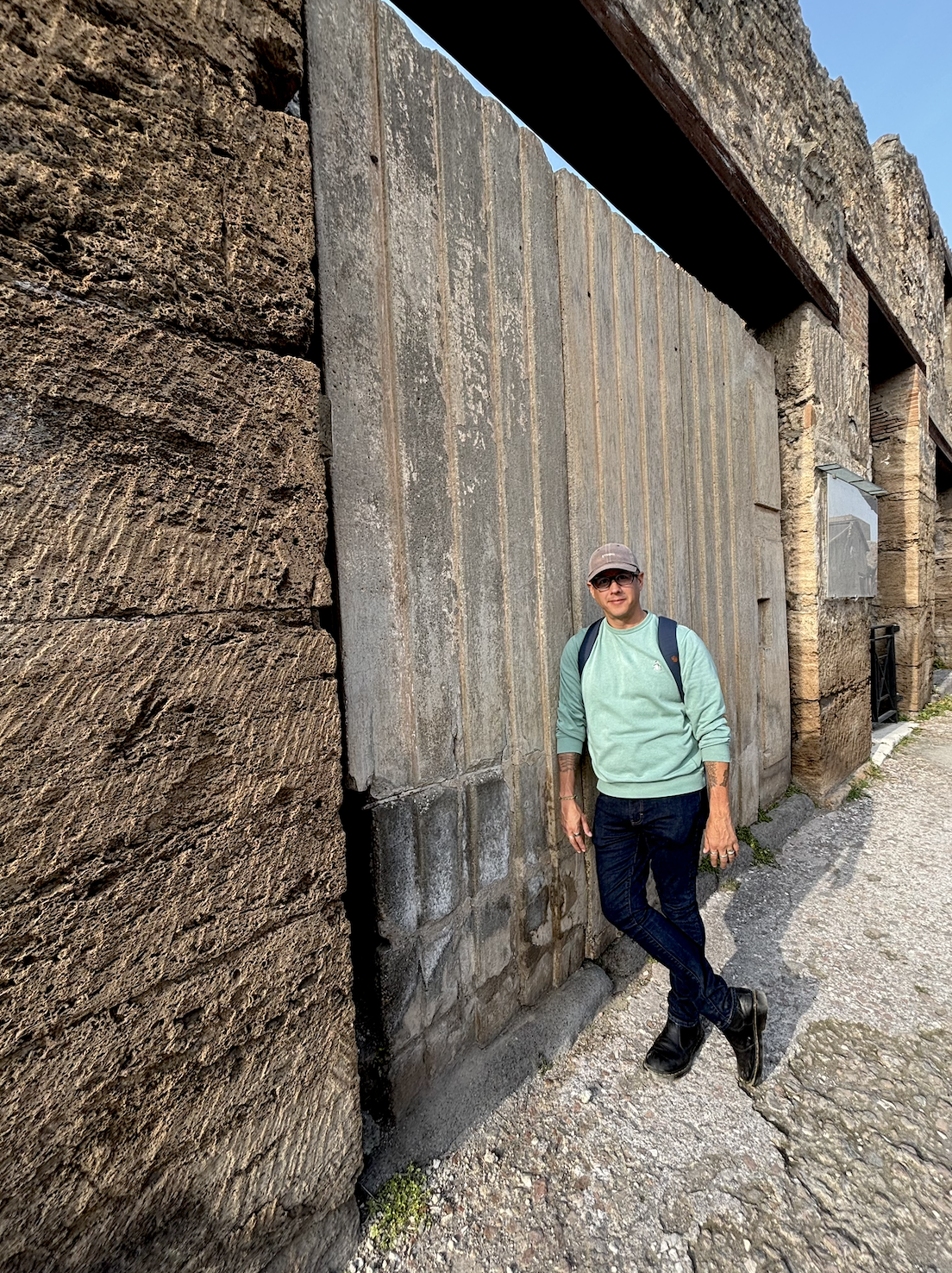
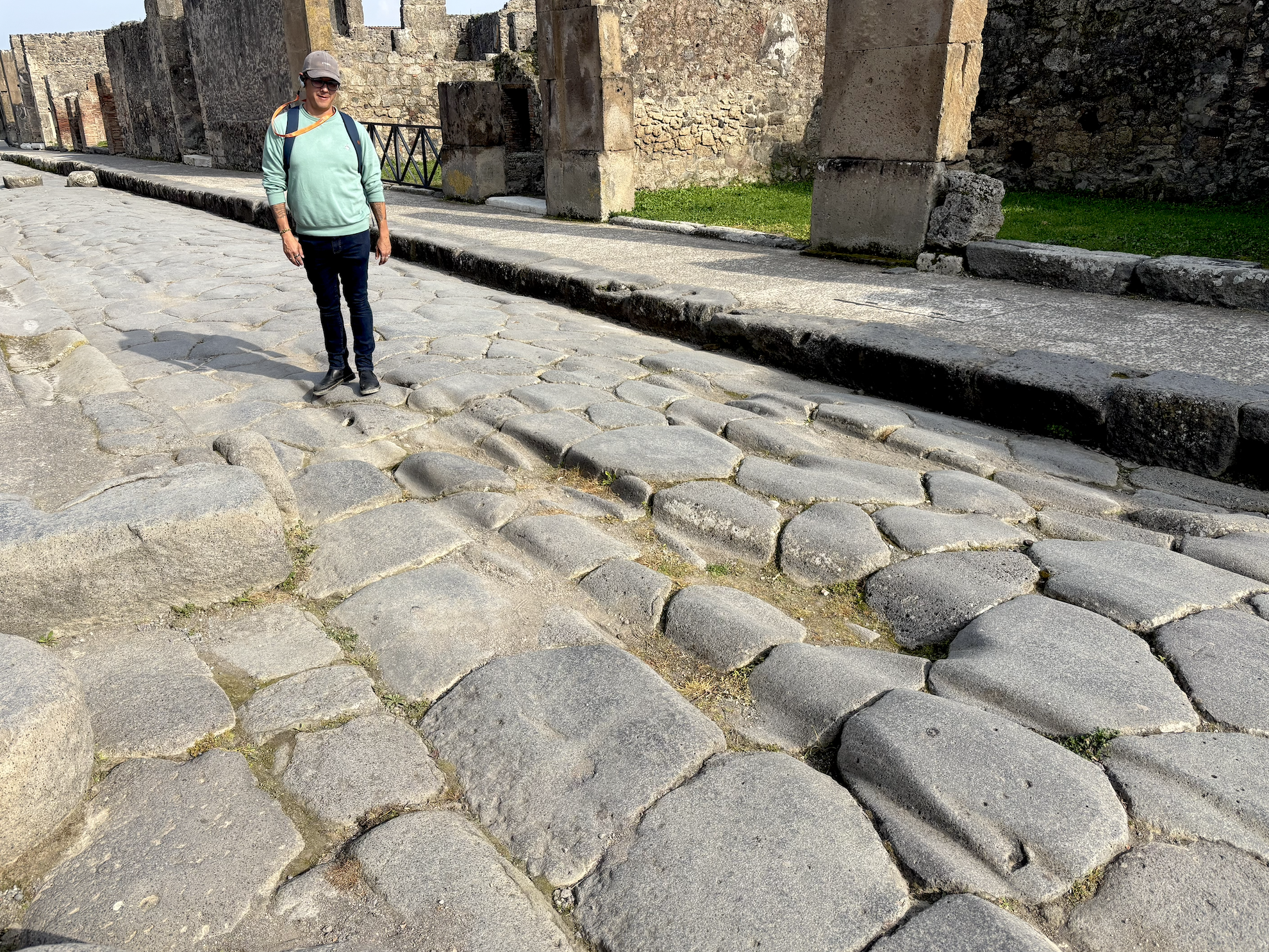
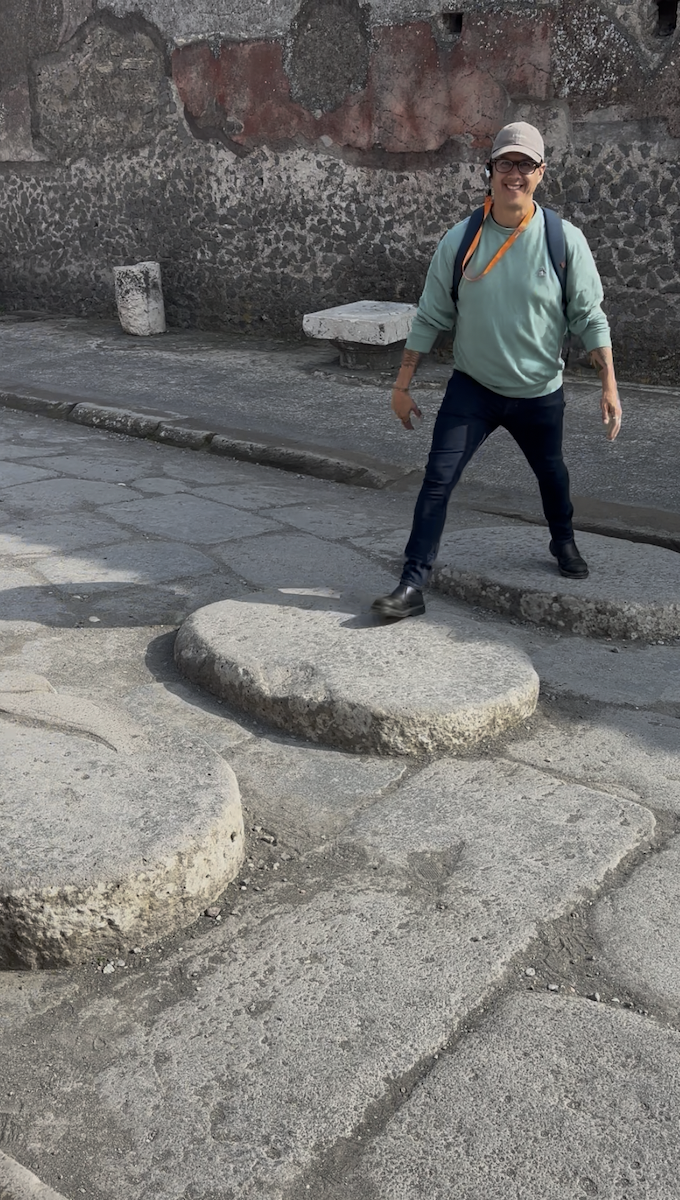
The roads. Chariot tracks are literally still carved into the stone streets. You can see them. You can run your hand along them. People drove vehicles down these roads every single day and the evidence is right there under your feet, 2,000 years later.
The crosswalks. Raised stepping stones so people could cross the street without stepping in whatever was running through the streets and you can walk across them yourself. The same crosswalks Romans used. Let that sink in.
The grid. The city is so perfectly laid out - home after home, business after business, all organized in a proper urban grid. You turn a corner and there's another block of houses. You turn another and there's a row of what were once shops. It's structured and logical in a way that feels almost modern.
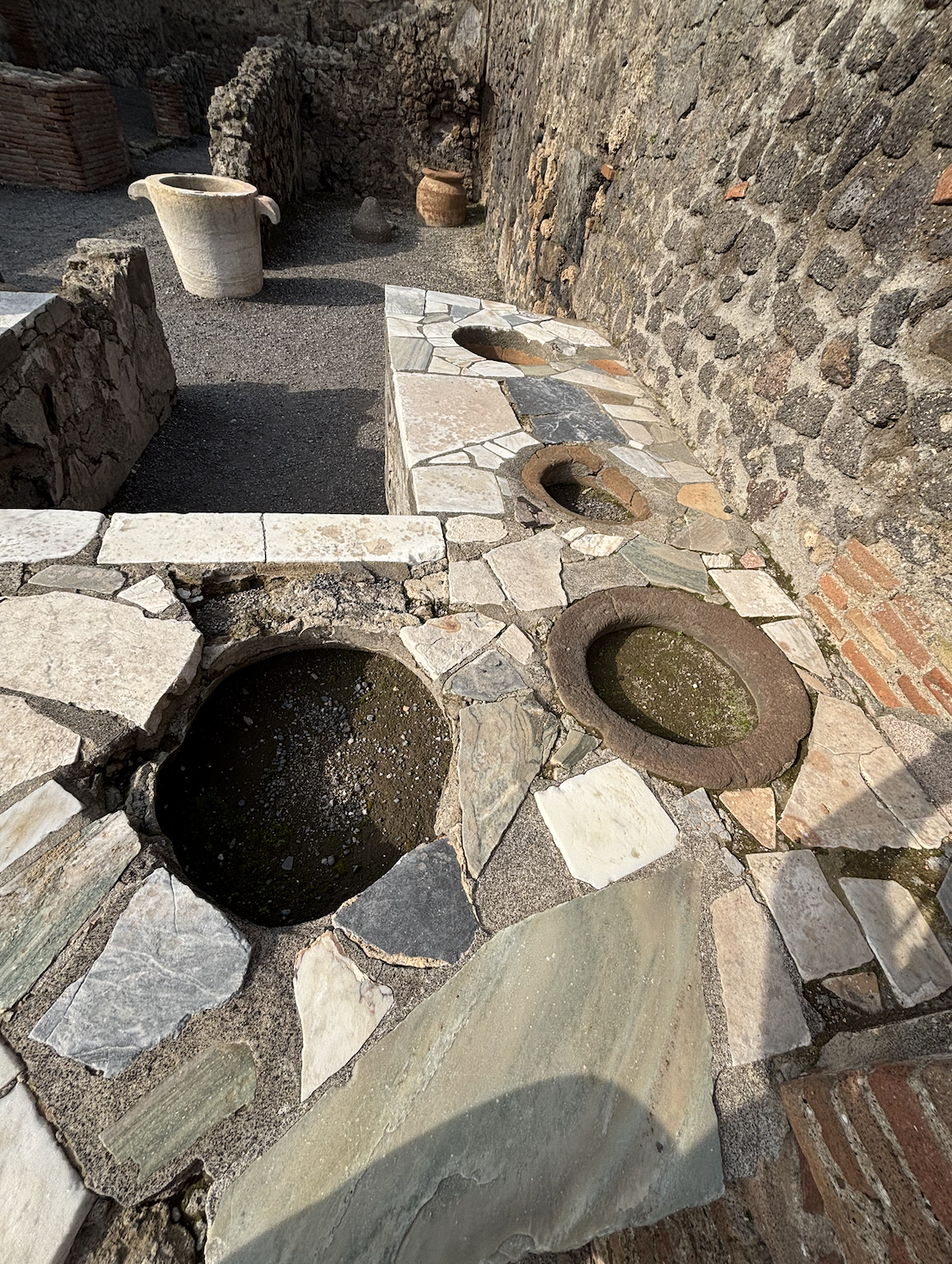
The street food scene. There were 80+ food stands in Pompeii. Fast food on literally every corner. These were built-in stone counters with circular holes for pots of food, and you can still see them lining the streets. Pompeii had a takeout culture before takeout was even a concept.
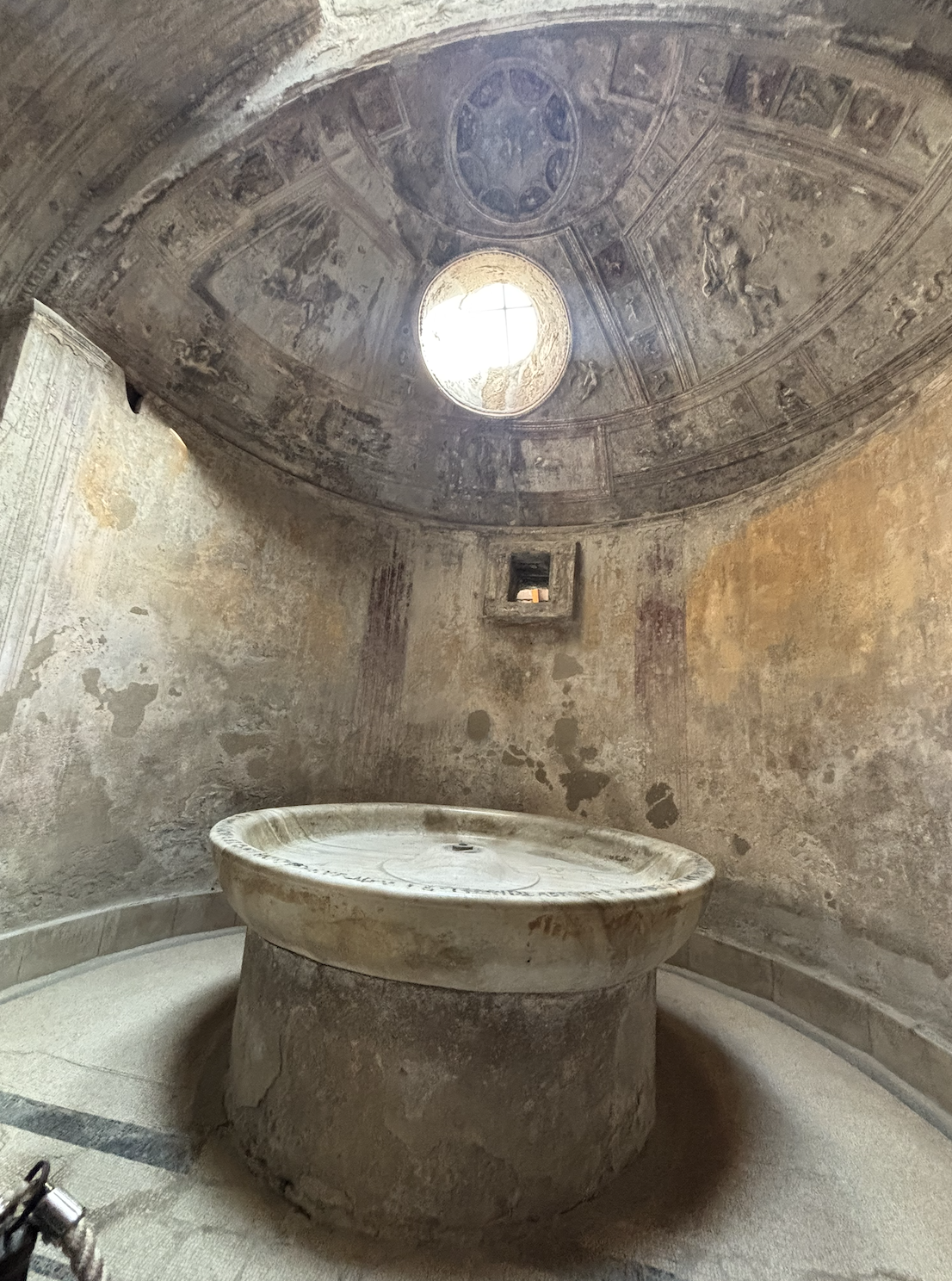
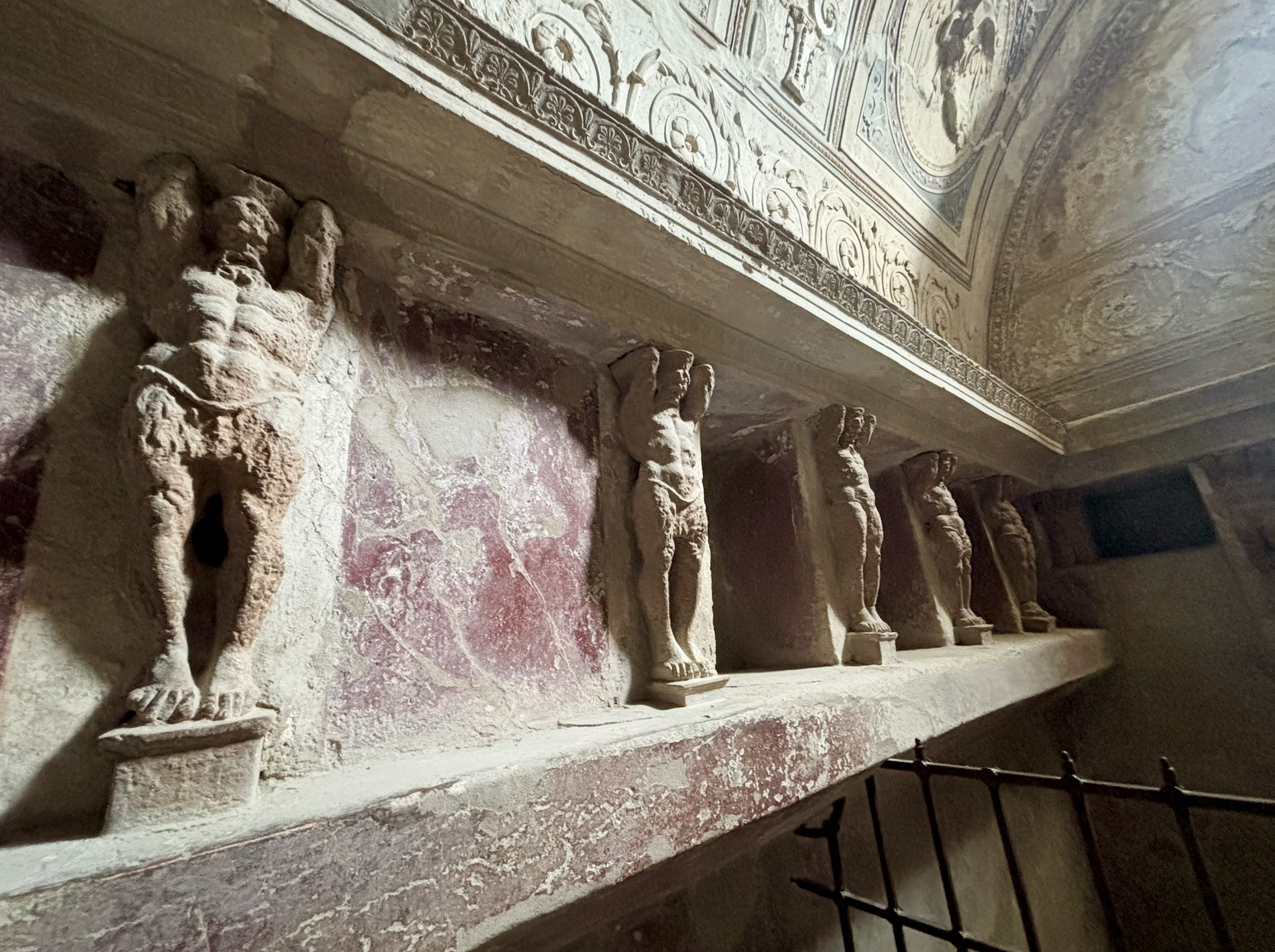
The bathhouses. People spent their days in communal bathhouses, think modern-day spas, with hot rooms, cold rooms, social spaces. This was just... regular life.
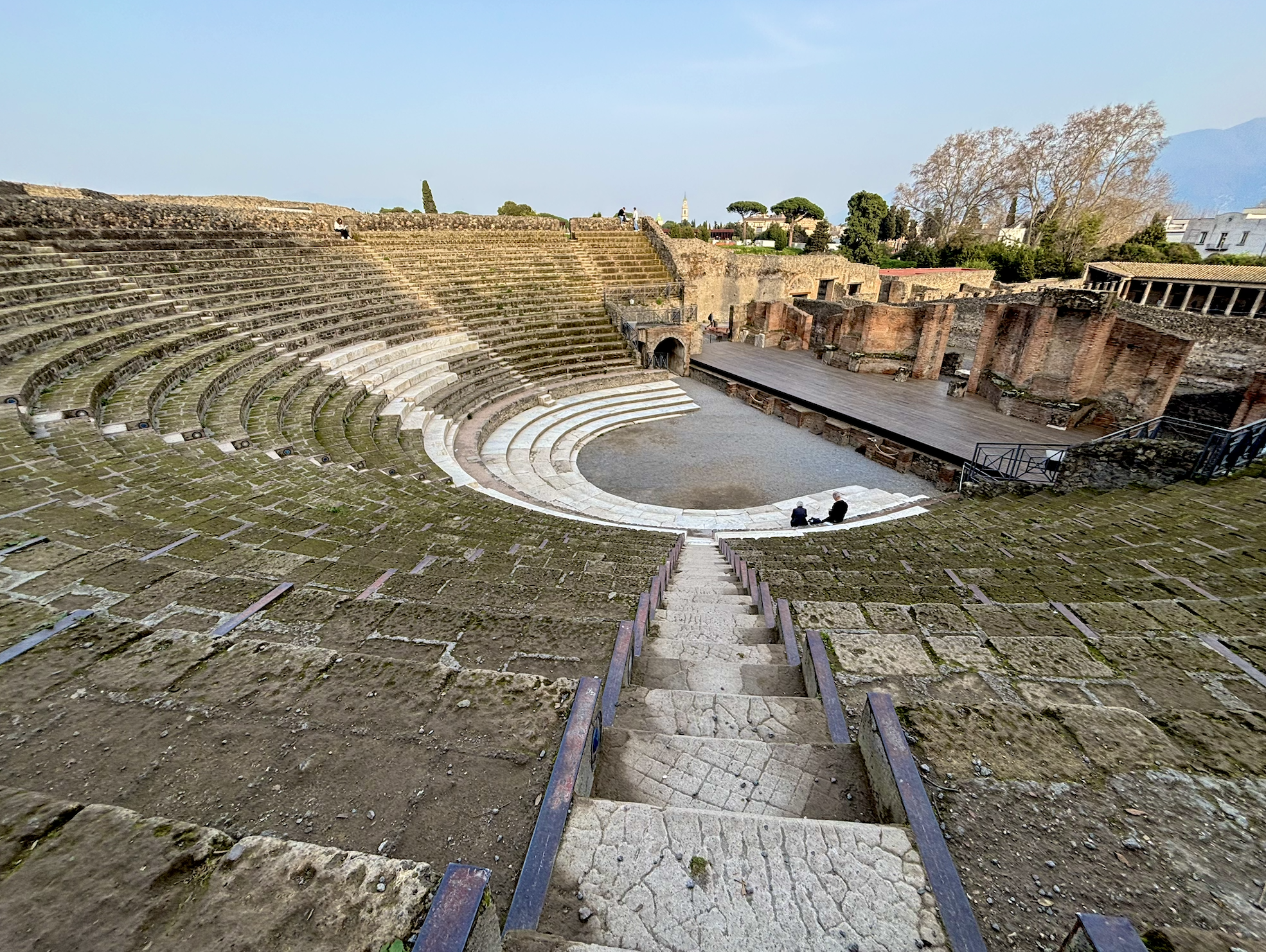
The theatres. There was a massive theatre where people went to watch live performances. Entertainment was a central part of daily life in Pompeii.
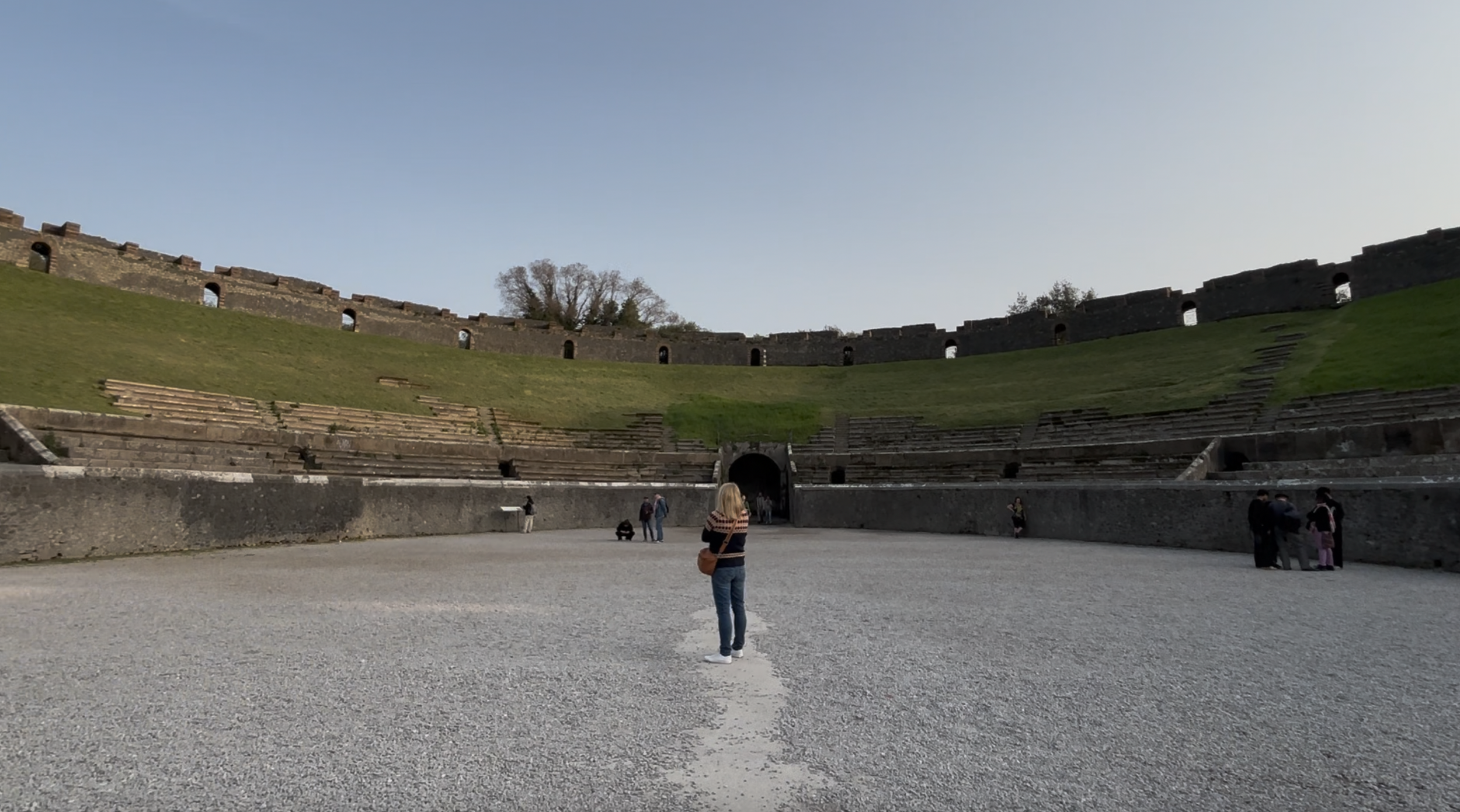
And then there's this - Pompeii had its own gladiator arena, built 100+ years before Rome's Colosseum. Pompeii was ahead of the curve in ways that are genuinely shocking.
The Moment That Got Me
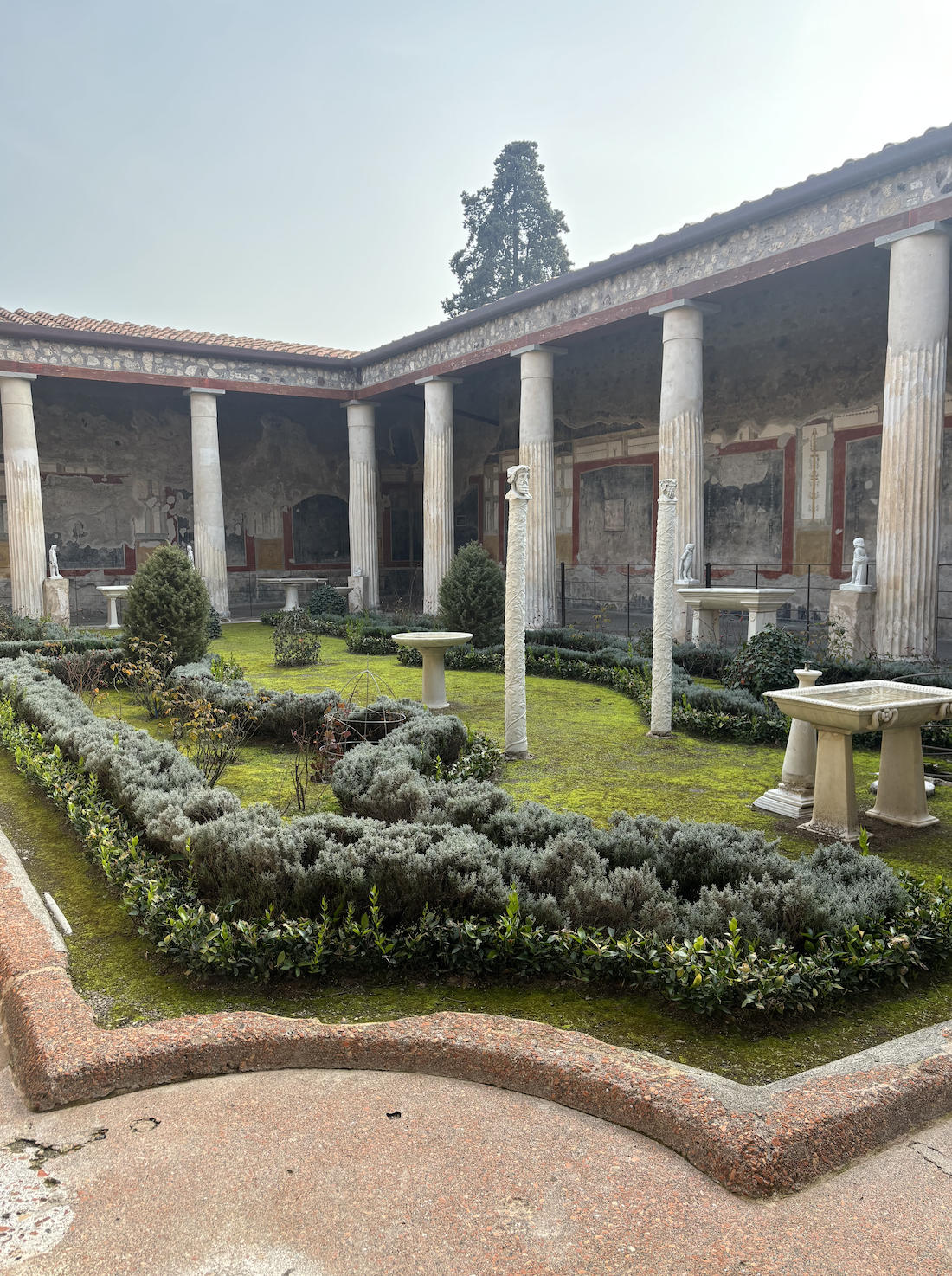
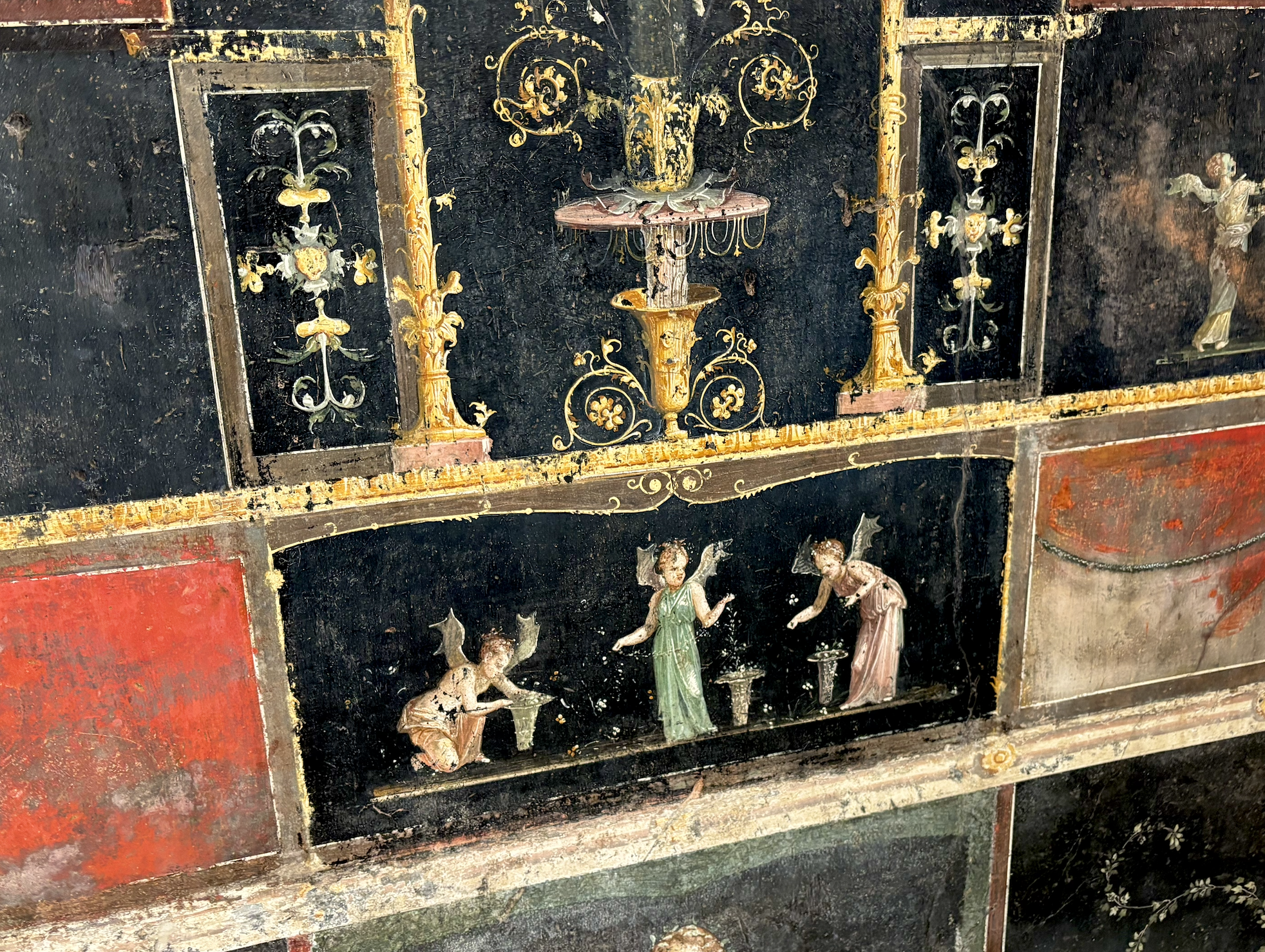
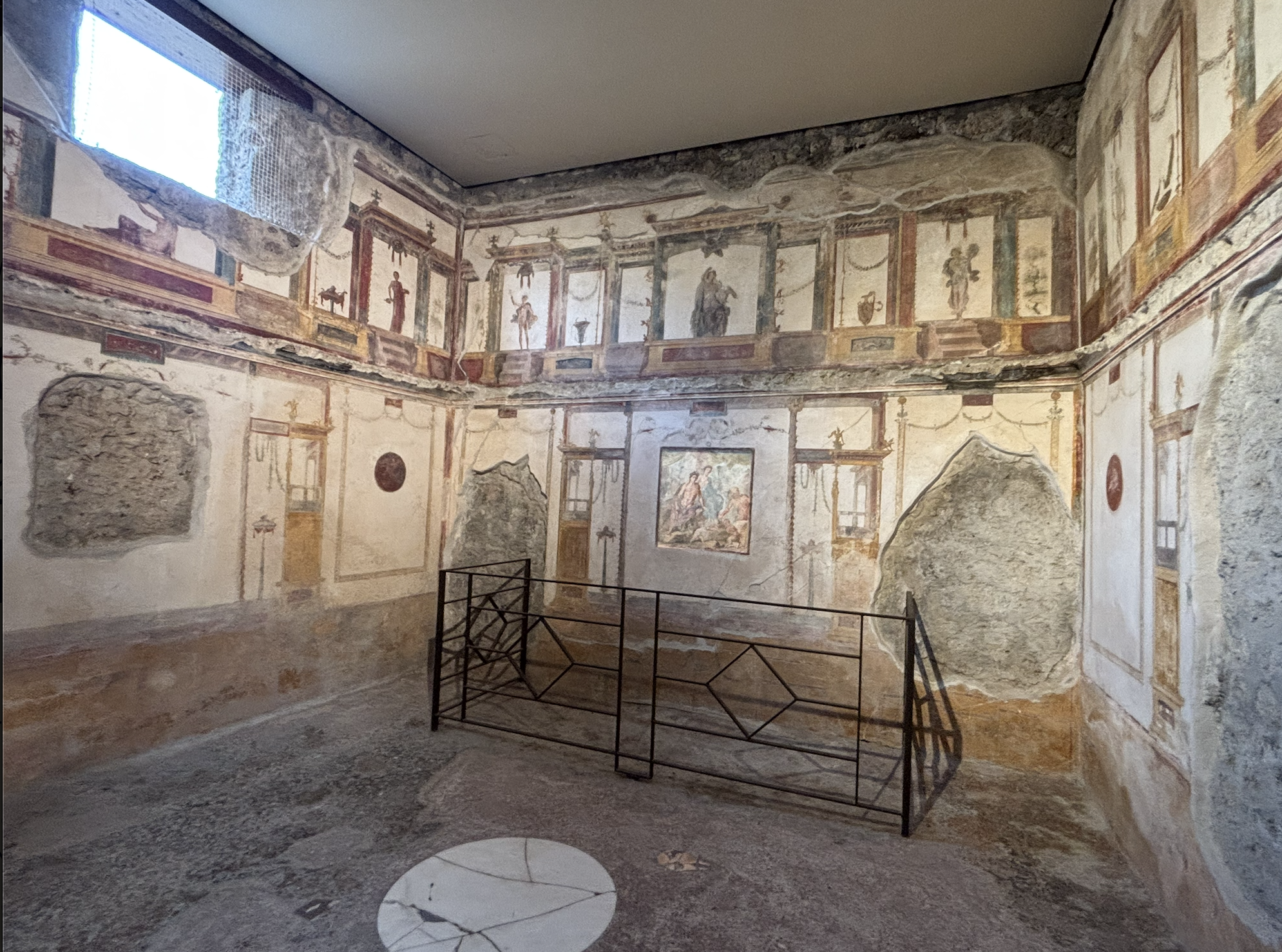
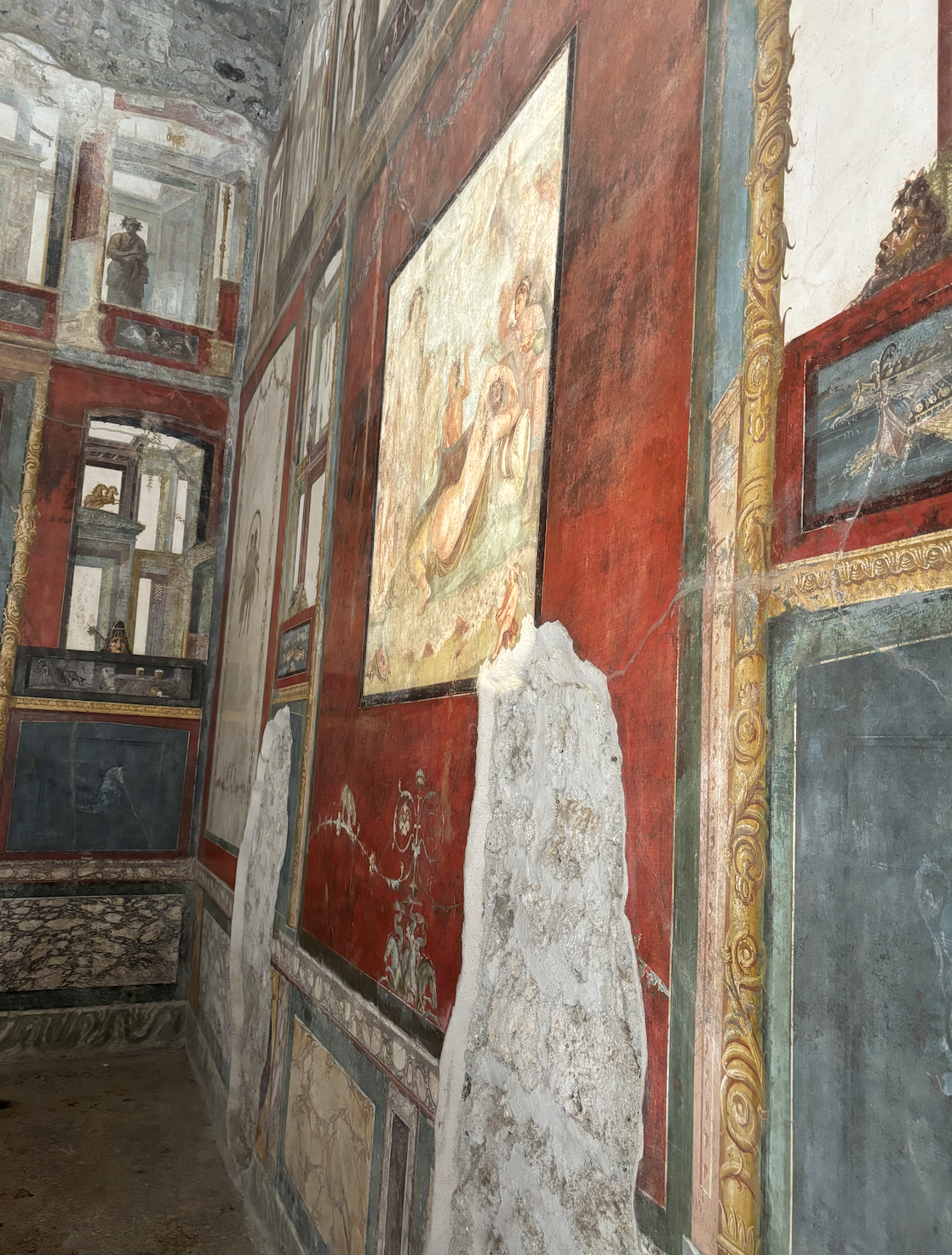
Walking through the residential streets is when it really hit me. Entire houses, still standing. Walls covered in frescoes - actual painted artwork, still colorful, still detailed after two millennia. You're standing in someone's home. Someone who had a morning routine, a favorite food stall, a neighborhood they knew by heart. And all of it is just... there.
I walked through a doorway into a courtyard and had to stop. Both hands on my head. Full-on movie reaction, except I wasn't performing it, it just happened. Because sometimes the weight of a place is so big that your body responds before your brain catches up.
The Engineering, Though
Can we also talk about the fact that Pompeii had indoor plumbing? Running water piped directly into houses. Fountains throughout the city, strategically placed so no one was ever too far from fresh water. The engineering was extraordinary for the time.
Now, here's the footnote history throws in: those pipes were lead. And lead poisoning was very much a real issue that likely affected health and lifespans in ways people didn't understand at the time. So there's a little irony tucked into the ingenuity. But still - the concept, the ambition, the sheer human cleverness of designing a water distribution system for an entire city in 79 AD? Mind-blowing doesn't cover it.
Get a Tour Guide. Seriously. Do Not Skip This.
Okay, this is the most practical advice I can give you, and I'm saying it with love: get a tour guide.
Pompeii is massive. Like, comically, unexpectedly huge. If you just wander in without a guide, you will miss things. Important things. Fascinating things. Things that would have completely changed your experience.
A guide takes you directly to the best spots, the ones that don't have obvious signage, the ones tucked down side streets, the ones where you need context to understand what you're even looking at. And the context is everything. Knowing the story behind what you're seeing is what makes it hit. Without it, you're just looking at old walls. With it, you're living inside history.
My recommendation: do the guided tour first, then give yourself time to wander on your own afterward. Best of both worlds. You get the knowledge, the highlights, the meaning, and then you get the freedom to revisit your favorite spots, take your time, soak it in at your own pace.
Just make sure you give yourself enough time overall. This place deserves it.